Piralanova
Industrial team meeting with finance specialist

Structured conversations

A measured, method-driven conversation can surface hidden assumptions before they become pressure points in industrial finance decisions.

When a capital plan or risk concern feels tangled, a structured outside view can help Canadian industrial teams see the pattern without promising a result. This section explains how Piralanova approaches such conversations: listen to operational context, translate it into financial patterns, then reflect back a neutral summary that highlights where assumptions carry the most weight. The process is intentionally calm and methodical, designed to reduce noise rather than push a specific structure. Every exchange is informational and does not replace professional advice tailored to the facts of each facility, contract, and counterpart. Past performance does not guarantee future results and outcomes may vary for every organisation, even when situations look similar on paper.

Learn more

From principle to practice

Overview of complex industrial plant in Canada

Staged projects

Capital projects behave like long journeys with multiple junctions. This block describes how Canadian operators can break a project into stages, from early design through commissioning, and assign simple financial markers to each stage. The aim is to see where commitments harden, where flexibility remains, and how delays or scope changes might ripple through cash and covenants. Results may vary and no timeline is certain, but a staged view can support more deliberate go or pause decisions.

Focused risk

Risk registers often grow dense without becoming clearer. This block focuses on selecting a smaller set of named risk channels, such as outage length, customer dependency, or regulatory timing, and linking each one to specific financial indicators. The approach treats risk like a network diagram rather than a list, helping teams see where several channels converge. Past performance does not guarantee future results and no mapping exercise can remove loss potential, yet visibility improves discussion quality.

Governance team reviewing industrial finance decisions

Governance frame

Clear records and repeatable steps help industrial finance decisions stay traceable when projects stretch over years and teams change.

Governance is the quiet frame around every industrial finance decision. Committees, boards, and senior teams need a shared script so complex projects do not depend on memory alone. This section sets out how simple artefacts, such as scenario summaries, assumption logs, and decision checklists, can anchor discussions for Canadian operators. Each tool is designed to be flat and factual, highlighting trade-offs without implying that any path is safe or certain. Past performance does not guarantee future results and results may vary as conditions shift, so governance records should be treated as living references, not rigid instructions. Nothing here replaces legal or financial advice; it is a guide to clearer internal conversations.
Get in touch

Risk channels

Risk framing works on a simple rule: name the channels where stress can travel, then check where they meet. In industrial finance, those channels often include outage duration, contract concentration, input price swings, regulatory shifts, and project execution risk. This section shows how Canadian plants and infrastructure teams can sketch those channels as if mapping pipes across a facility. Each pipe carries potential pressure into covenants, internal limits, and day-to-day liquidity. Rather than rely on dense formulas, the explanations lean on straightforward questions. What happens if a planned shutdown runs longer than expected. How would a delayed customer project affect near term cash. Which assumptions would need to hold at the same time for the optimistic scenario to remain comfortable. By answering in concrete terms, teams can see where a small change in one area could create strain elsewhere. No checklist can prevent loss and no tool can promise a particular outcome; past performance does not guarantee future results and results may vary between organisations. The purpose of this framing is to support calm, structured discussions with qualified professionals, not to replace formal legal, accounting, or financial advice.

Focused industrial finance insight

Industrial finance ideas arranged as a calm walkthrough for Canadian plants and infrastructure teams facing complex capital and risk questions

Capital projects, maintenance windows, emissions targets, governance reviews; industrial finance decisions arrive as a crowd, not a queue. This page gathers a focused set of explanations built for Canadian manufacturers, utilities, and infrastructure operators who want structured thinking without exaggerated promises. Each section follows a simple pattern: outline a principle, then show what it means when real assets, contracts, and people are involved. Technical terms are translated into neutral, practical language, so an operations director, finance lead, and maintenance manager can hold the same mental picture while debating options. The emphasis stays on trade-offs, not predictions, with repeated reminders that past performance does not guarantee future results and outcomes may vary between organisations. Nothing here is personal advice or a recommendation to follow a particular path; it is reference material designed to support more grounded conversations with qualified professionals who understand the specifics of each facility, project, and balance sheet. When conditions shift, these explanations aim to reduce confusion, not remove uncertainty, by making assumptions, pressures, and decision points easier to see and discuss.

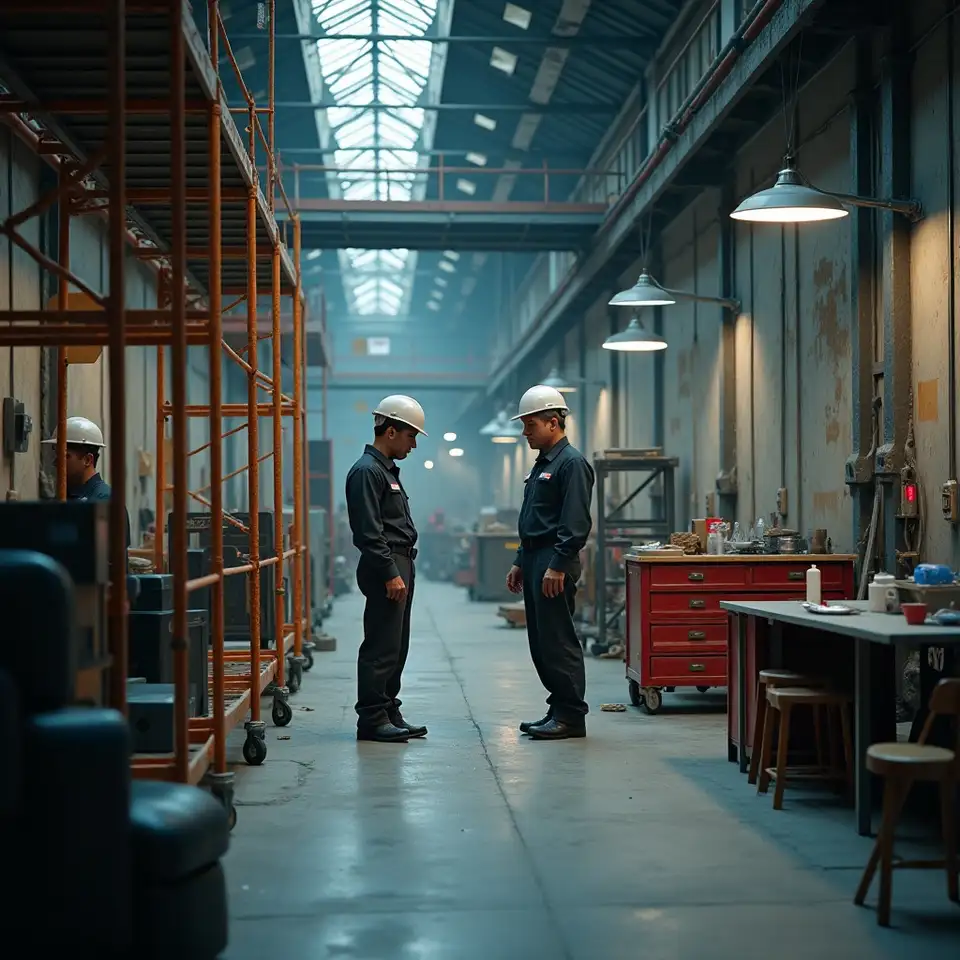
Industrial finance discussion inside Canadian factory

Capital focus

Capital planning in industrial settings starts from a principle that long-lived assets demand long-lived awareness. A new line, retrofit, or emissions upgrade is not just a number in a model; it is a pattern of downtime, ramp-up, and maintenance that will echo through cash flows and internal reports for years. This section explains how Canadian operators can frame capital decisions by pairing engineering realities with financial timing. Instead of chasing a single perfect forecast, the material encourages three simple views: a base case that reflects current expectations, a slower case that recognises common delays, and a tougher case that tests tolerance for prolonged strain. Each view is treated like a different operating mode on a control panel, with clear thresholds and warning lights rather than hidden assumptions. The goal is not to eliminate uncertainty, which is impossible, but to make its shape visible before commitments are signed. Past performance does not guarantee future results and results may vary across facilities, technologies, and markets. No structure described here is a recommendation or promise; it is a lens for more deliberate conversations between engineering, finance, and leadership.

Scenes that shape focused industrial finance decisions in Canada